Dr Norman
Claringbull
Psychotherapist
Counsellor
Psychologist
Former Head of Counselling & Psychotherapy Studies at the University of Southampton; PhD (D. Psychotherapy); MSc (Counselling);
MA (Mental Health); BSc (Psychology) BACP Senior Accredited Practitioner;
UKRC Registered; Prof Standards Authority Registered

The Friendly Therapist
Call or message me now for a free initial telephone consultation
Confidential • Experienced • Based near Southampton
In person or online appointments
Private health insurances accepted
Phone: 07788-919-797 or 023-80-842665

Depression Counselling & Psychotherapy
What’s life like for you?

Are you feeling generally unhappy? You just can’t manage anymore and nothing you do seems to make a difference. Work’s a trial and home’s no better. Sometimes you feel restless or nervous and at other times you feel exhausted, but you just can’t switch off or sleep properly. You’re losing interest in everything. Life is just one long drag. You even avoid your friends. It’s all too much bother. Your confidence has gone. You just feel useless and no good to anyone. You might even feel like hurting yourself. You are depressed and it’s not going to go away on its own. You need help
Could you be Depressed?
These are the symptoms your GP is looking for.
a) Feeling low or sad
b) Can’t be bothered with anything – life’s no fun anymore
c) No energy – always tired
Add in poor sleep, appetite loss, can’t concentrate, low self-worth, or even thinking about self-harm/suicide and you are very likely to be depressed – there’s a more comprehensive checklist at the bottom of this page.
The good news is that depression doesn’t have to rule your life. You can recover. If depression strikes, don’t suffer in silence. Don’t try and “sort it yourself”. Get help – it works!

What is Depression?
Depression is not the same as feeling downhearted or sad. After all, we all get very fed up or feel really low from time to time. Of course, sometimes there’s a good reason for that. Maybe something bad has happened. At other times there’s no obvious reason. We just feel blue. In either case that’s not depression. That’s life. Eventually we bounce back. However, sometimes those low moods won’t go away and begin to seriously affect our lives. Perhaps they even cause us to behave noticeably differently, or we just feel unable to cope with life – “I’m not myself anymore”. That’s depression. We have a problem. We need help

How I Can Help You with Depression
Depression usually arises when life’s problems overwhelm us. What these problems are, and how they affect us, will vary from person to person.
Talking things over can help. Being shown some useful self-help moves helps too. It’s not easy and that’s why many people find counselling and psychotherapy can be so effective.
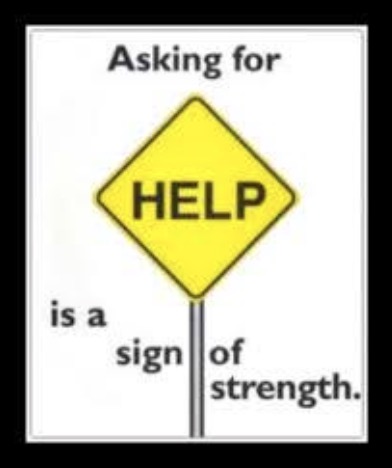
I can help you understand what may be contributing to your depression, talk through the problems you are facing and find ways forward. The help I offer will depend on you, your situation and how depression is affecting your life. Of course, asking for help can be hard but doing so is the first step on the road to recovery.
What to do about Depression
The generally accepted approach to depression adopted by most therapists is to deliver treatment at a number of intensity levels according to the severity of the condition.
Level 1: Mild depression – Life is just a bit naff.
Fortunately, most mildly depressed people recover within six months. However, basic-level supportive counselling can sometimes help speed up the healing process or at least help to make life more bearable. Adding some simple CBT to the treatment program can also help with mild depression. This usually involves learning about how to use some simple routines that can help you to help yourself.
Level 2: Mild to moderate depression – Life’s getting out of control and it’s getting more and more difficult to just get by.
This is when more active treatment is needed. GPs will usually prescribe an antidepressant, and psychotherapists normally offer more detailed and more intensive psychotherapeutic help. For most people, a treatment plan that combines pills, talking things over, and learning self-management skills is generally the most productive way forward.
Level 3: Severe depression – Can barely function and life is out of control.
This requires a more intensive approach, both from the doctors and the therapists. A referral to a psychiatrist or the local mental health team is often indicated. At this stage, adopting a more powerful medication regime might be necessary. Again, psychotherapy is an essential part of the overall treatment plan.
Level 4 – In a very small number of cases depression might be serious enough to require a short spell of in-patient treatment. This is when psychiatrists take the lead in the ongoing treatment planning. Even then, psychotherapy is still a vital part of any treatment package.

Here’s that comprehensive checklist
You don’t have to have all of these symptoms. You just need enough to make you feel bad. That’s depression!
YOU | YOUR LIFE |
HOW I FEEL | I’m sadI don’t get much pleasure from lifeI often feel like I’m about to cryI don’t have any hope. It’s all my faultI’m just of no use to myself or to anyone |
MY GET UP AND GO | I just can’t be botheredI have no energyI’m tired all the timeI don’t care about anythingI can’t concentrateI’m not interest in anything much |
MY THOUGHTS | Nothing is going to get better for meI’m no goodEverything is the worstIt’s all my faultI can’t make decisions anymoreI’m always worried about my healthI’d be better off dead |
MY LIFE | I can’t be bothered to go outI don’t keep up with my friends or familyNothing interests me anymoreI just can’t be bothered to do anything |
MY BODY | I can’t sleep or I sleep too muchI don’t eat or I eat too muchSex – what’s that?My moods seem to swing up and down |