Dr Norman
Claringbull
Psychotherapist
Counsellor
Psychologist

The Friendly Therapist
Call now for a free initial telephone consultation
Total confidentiality assured
In-person or video-link appointments
Private health insurances accepted
Phone: 07788-919-797 or 023-80-842665
PhD (D. Psychotherapy); MSc (Counselling); MA (Mental Health); BSc (Psychology)
BACP Senior Accredited Practitioner; UKRC Registered; Prof Standards Authority Registered
Blog
BLOG POST – Winter 2020
Posted on November 25th, 2019
It’s cold, dreary, and freezing – welcome to winter, UK style! Sometimes, when we are struggling through these, the most depressing months of the year, it can be hard to find an upside to life. It’s no wonder that so many of us occasionally feel a bit low, a bit depressed. However, for most of us, most of the time, feeling a bit low is just a perfectly normal reaction to life’s downsides. Things go wrong and we get fed up, sad even. That’s all there is to it. That’s life! However, when our gloomy reactions to life’s adversities are excessive, (whatever the season), when they interfere with our lives, when they don’t have an obvious cause, when they are long-lasting, then that’s when depression becomes ‘a matter of clinical concern’.
Mental health professionals recognise a number of different types of depression and classify them according to severity, frequency, and how long the symptoms have lasted. However, carrying out a detailed diagnostic evaluation of depression is an exacting and time-consuming job. Busy GPs cannot afford to be so finicky – they just don’t have the time. In the UK most GPs diagnose depression using the National Institute for Health and Care Excellence, (NICE), Guidelines. However, some diagnosticians prefer to use the World Health Organisation’s mental health check list. These two diagnostic protocols are very similar to each other, easy to use, take only moments, and are reasonably accurate, (at least to begin with). GPs who use the Nice Guidelines check their patients on a yes/no basis against the following criteria.
Key Symptoms:
Persistent sadness or low mood
Marked loss of interests or pleasure
Associated Symptoms:
Fatigue or loss of energy or slowing of movements
Disturbed sleep (decreased or increased compared to usual)
Decreased or increased appetite and/or weight
Poor concentration or indecisiveness
Feelings of worthlessness or excessive or inappropriate guilt
Suicidal thoughts or acts
The rough rule of thumb is that the more positives scored on the Associated Symptoms list, the more the patient is depressed. In the UK’s National Health Service, depression is usually graded mild, moderate and severe. Treatment is usually offered on a stepped basis depending on how the patient’s needs evolve.
Step 1 No action, (most depressives recover within 6 months, treated or not)
Step 2 Medication and low-intensity psychological therapy, (basic CBT)
Step 3 Medication and high-intensity psychological therapy (advanced CBT)
Step 4 Hospitalisation and multi-professional in-patient care
Of course there are many mental health professionals who disagree with the NHS approach to treating depression. They would argue that depression is a much more complex condition than the NICE protocols suggest and therefore the treatments required are equally more complex. Nevertheless, if pushed, many of these dissenting professionals would probably accept that the NHS stepped-care system gives some relief to some people – at least on a short-term basis. However they would also claim that treatments based on medication and/or CBT often only serve to alleviate the symptoms of depression; that they don’t properly address the causes of depression.
My own approach to depression is multi-faceted from the onset. Being what is known as a ‘Pluralistic’ or an ‘Integrative’ practitioner, I don’t allow myself to be limited to any given treatment model for depression or to exclusively subscribe to any given causative theory. I prefer to tailor each individual’s treatment plan to suit that person’s needs. So, for any particular client I’ll use whichever approach, (or package of approaches), that seem likely to be the most helpful. Not only that, but I will change my treatment plans if my patient’s needs change. Flexibility is the name of the game.
If a do-nothing, time-is-the-great-healer, approach, (NICE – Step 1) seems to be the right one then OK. However the patient’s progress over the next few months needs to be properly monitored. It’s not just ‘file and forget’. There is still a lot that therapist can do and should do to help. For example, carefully applied positive psychological reinforcements will at least encourage recovery and in many cases will help to speed it up. In all cases patients should be helped to review their lifestyles and to make suitable adjustments.
Traditionally, psychotherapists and GPs have been at the opposite ends of the prescribing spectrum. Supposedly, GPs irresponsibly ‘handed out pills like Smarties’ and psychotherapists were far too ‘holier than thou’ to ever consider medication. Fortunately, these outdated, competing, professional orthodoxies have largely disappeared. Modern psychotherapists and doctors collaborate. I often refer patients who present with depression to their GPs. That’s because it is not unusual for patients to need the ‘chemical lift’ that medication can provide before they can even begin therapy. Not only that, but therapists must always remember that all sorts of medical problems, (a defective thyroid for example), can cause depression-like symptoms in people. It is always good practice to get prospective clients medically checked first.
In many cases my treatment model for depression includes medication and psychotherapy together. Have a look at the information leaflets supplied with any anti-depressant medication – they all say ‘use pills and talk’. It’s also a good idea if both the doctors and psychotherapists are prepared to adopt a ‘suck-it-and-see’ approach. After all, different pills work, (or not), for different people and that‘s equally true for the wide variety of psychotherapeutic approaches that claim to have a positive impact on depression.. My advice to any patient is to shop around and find the treatment package that suits you and to stay away from any medic or ‘ologist’ who has a ‘one-size-fits-all’ attitude.
So, in sum what I am saying about depression is this. It’s OK, it’s normal to feel low or sad, (generally dispirited), when the circumstances demand it. What is not OK is for those feelings to disrupt your life. So, when your life is getting a bit out of hand, when your life no longer has an upside, get some help – that’s what psychotherapists are for.
BLOG POST – Autumn 2019
Posted on August 31st, 2019
ADDICTION:
Addiction isn’t just a problem limited to a small, very troubled, sector of society. It’s not just a condition that only threatens heavy drinking ‘boozers’ or party going ‘pill poppers’. The unfortunate reality is that addiction, (also known as ‘substance dependency’), is found throughout the entire population – all ages – all occupations – all communities. Not only is such substance misuse widespread but it can involve dependence on virtually any mood-altering substance taken in excess, (alcohol, nicotine, prescription drugs, legal drugs, illegal drugs, performance-enhancers, caffeine, chocolate, sugar – almost anything). However, we usually tend to only notice the more obvious, the more extreme cases – the so-called ‘winos’, the ‘alkies’, the ‘junkies’. This is because most addicts are very good at appearing to live normal lives. They manage to keep their over-indulgences well-hidden and keep the rest of us well fooled. Many addicts deceive themselves too – they kid themselves that nothing is really wrong. They are in denial.
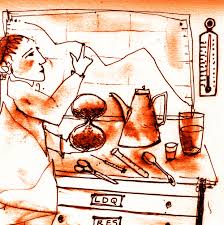
The overwhelming majority of addicts seem to manage their lives OK – to begin with at least. However, even for these ‘hidden’ or ‘high-functioning’ addicts, eventually the party has to stop. Their bodies and their minds start to deteriorate and their lives begin to spin out of control. That’s when substance misusers start to go downhill rapidly. If they are lucky they come to realise that they can’t go on like this. At this stage in their lives, addicts only have two choices left: 1) Get clean or 2) Continue to deteriorate, eventually to die a particularly nasty death. It’s that simple. For them, the party is over!
So, can substance misusers and/or addicts get clean by themselves? Well obviously the first task is to stop the boozing and stop the drugging. Put simply – stop using! Actually, for most people stopping is easy. It is the second task – staying stopped – that is hard. This is when substance misusers most need help. This is when counselling and psychotherapy comes into the picture. However, even for experienced therapists, helping addicts to successfully stop relying on their ‘chemical friends’ is far from simple.
What about you? Do you have a problem? If you are confident that you don’t, then why not prove it? Take this simple test. See if you can give up one of your over-indulgences for just 90 days. If you can’t, then it’s time to think. It’s time to start making some decisions about your lifestyle. In the meantime, if you want to know more about the emotional and physiological impacts of mind altering substances, legal and illegal, why not have a look at Chapter 8, ‘Prescription Drugs, Recreational Drugs and Addiction’, in my latest book ‘ Mental Health in Counselling and Psychotherapy’. You can find out more about this book and any of my other books and publications by going to the ‘MY BOOKS’ page on my website – www.normanclaringbull.co.uk
BLOG POST – Spring 2019
Posted on March 1st, 2019
COUNSELLING: PROFESSION OR HOBBY?
Many counsellors and psychotherapists are concerned about the viability of counselling as a respected and valued profession. Of course, the proper place of counselling and psychotherapy in society has long been debated with no solution in sight. However, assessing the profession’s value to society is much easier. Quite simply, judging from the job opportunities available to its practitioners, it doesn’t have any value.  (more…)
BLOG POST – Winter 2018/19
Posted on November 30th, 2018
ROBOT COUNSELLORS ARE ALREADY HERE
There has been a lot of debate recently about the ways in which advanced technology is increasingly replacing people in all sorts of ways. Many practitioners in the talking therapies mistakenly believe that this won’t happen to them. Therapy is all about building relationships they say, and that can’t be done by machines. Wrong – it’s already happening. 
If, like me, you regularly provide on-line therapy via audio-visual software then your clients are already accustomed to relating to an on-screen therapist. It won’t be long before super-computers can produce life-like artificial ‘therapists to front algorithm-driven therapy websites. I doubt that most clients will even notice that their therapists have been replaced by computer-powered images. After all, machines can just as easily go, ‘mmmm’, ‘uh-huh’, or ‘OK’ as we can. However, what clients certainly will notice is that on-line therapists are much cheaper than real ones and always instantly available, night and day.
Lots of tasks that were assumed to need face-to-face, human interactions have already been given over to machines. More and more occupations, including the higher professions too, are under threat. Most futurologists predict the demise of accountants, lawyers, actuaries, and many other high-level jobs. Take medical services for example. GPs are increasingly offering their patients on-line consultations, much of which doesn’t necessitate any human intervention. It is even expected that a lot of routine surgery will eventually be carried out via intelligent automation, (and probably be the better for it). Clearly, no workers at any level, and that certainly includes psychotherapists and counsellors, have any guarantee of job security.
So, that’s the bad news. What can we do about it? Can we compete with the machines? Well yes, but only by offering something that the machines can’t. Look around you. Lots of people increasingly value the authentic. Such people favour real ale, real bread, and real books. They prefer live music, fresh food, vinyl records, and, above all, personal service. In other words, people are prepared to pay for quality. Future therapists too will need to deliver a quality service if our profession is to survive as a human enterprise. At present, the quality of our profession is in a sorry state. Its status is diminished by having far too many poorly qualified and inadequately trained practitioners. We need to up our game. Our profession’s future, if it has one, will probably lie in the hands of a new breed of highly-qualified, highly-skilled, properly regulated, practitioners. They will need to be well-educated professionally, (Masters level and beyond), and extremely competent practically, (structured post-graduate ‘hands-on’ training to nationally approved standards). Only practitioners who can deliver high quality, innovative therapy to a discerning public will survive. But of course, shouldn’t that already be the case?
BLOG POST – Autumn 2018
Posted on September 5th, 2018
IT’S HARD TO ASK FOR HELP
Most of us get depressed from time to time or we might get a bit stressed or anxious. However, sometimes these sorts of feelings can all seem a bit too much.  Put simply, we might be finding that our worries are getting on top of us. We have got a problem; possibly one of the common, low-level, mental health issues that life occasionally throws up. It can happen to any of us. (more…)
BLOG POST – Summer 2018
Posted on May 29th, 2018
WHO NEEDS HUMAN PSYCHOTHERAPISTS?
There has been a lot of debate recently about the ways in which advanced technology is increasingly replacing people in all sorts of ways. Many practitioners in the talking therapies mistakenly believe that this won’t happen to them. Therapy is all about building relationships they say, and that can’t be done by machines. Wrong – it’s already happening! (more…)
BLOG POST – Spring 2018
Posted on March 12th, 2018
DIAGNOSIS… A SHOT IN THE DARK:
All therapists diagnose their patients – even those of us who claim that they never do. We have to. How can we help our clients if we don’t know what their problems are? Some of us label our patients deliberately and use those labels as guides to treatment choices. Others of us, perhaps without realising it, implicitly label our patients if we usually adhere to a particular treatment approach (more…)
BLOG POST – Winter 2017/18
Posted on November 21st, 2017
TRAUMA – THE DO’s AND DON’T’s:
The first ‘do’ of all is simple. Take the drama out of trauma. From the victim’s view, it’s personal; it’s not a public circus. Trauma sufferers need calm. The last thing they need is everybody running around in a panic. 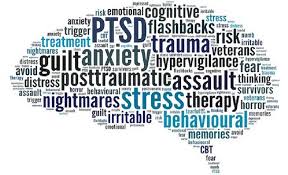 Athough the major disasters hit the headlines, the fact remains that most traumatised people are the victims of so-called ‘minor’ events, (at least in terms of their newsworthiness). (more…)
BLOG POST – Autumn 2017
Posted on August 31st, 2017
DEPRESSION – CAUSES AND CURES
Depression is not the same as feeling downhearted or sad. We all get seriously fed up or feel in a really down mood from time to time. That’s not depression; that’s life.  However, sometimes those low moods won’t go away and we don’t bounce back. If those low moods start to seriously affect our lives, to cause us to behave noticeably differently, to interfere with our usual day-to-day functioning, then that’s when psychologists start to consider that we might be suffering from clinically significant depression. (more…)
BLOG POST – Summer 2017
Posted on June 4th, 2017
UPGRADING THERAPIST TRAINING:
People depend on all sorts of professionals; doctors, solicitors, architects, nurses, teachers, dentists, accountants, and so on. The essential core of the public’s relationship with any type of professional advisor has to be trust. People need to be sure that these specialists know what they are doing.  They certainly don’t expect them to be incompetent or to cause harm. This means that the underlying assumption, no matter what the area of expertise, is that professionals are properly trained and qualified. Usually this means that professional-level service providers have undergone a recognised program of higher education. High-level professionals normally have graduate and postgraduate level qualifications in their chosen fields. Even many of the intermediate-level professions, such as paramedics, police officers, journalists, etc. are rapidly moving towards becoming graduate-level occupations. (more…)