Dr Norman
Claringbull
Psychotherapist
Counsellor
Psychologist
Former Head of Counselling & Psychotherapy Studies at the University of Southampton; PhD (D. Psychotherapy); MSc (Counselling);
MA (Mental Health); BSc (Psychology) BACP Senior Accredited Practitioner;
UKRC Registered; Prof Standards Authority Registered

The Friendly Therapist
Call or message me now for a free initial telephone consultation
Confidential • Experienced • Based near Southampton
In person or online appointments
Private health insurances accepted
Phone: 07788-919-797 or 023-80-842665
Blog
Blog Post – November 2014
BEATING ANXIETY: Part 2
Last month I blogged about how anxiety affects us all and about how sometimes it can get out of hand and start to disrupt, even destroy, our lives. As lots of people know only too well, anxiety can be extremely debilitative – psychologically, physiologically, and socially. It can cause us all sorts of personal and behavioural difficulties.  That is why I am going to use this month’s blog to talk about anxiety management – about how to ‘tame the tiger’. In other words I’m going to tell you how to govern your anxiety and better still, how to stop your anxiety governing you. (more…)
Blog Post – Sept/Oct 2014
BEATING ANXIETY: Part 1
Anxiety is a serious and very debilitating psychological disorder that makes life very difficult for millions of people in the UK today. It’s also very curable if treated properly. That’s why I’m  going to blog about this modern day scourge. This month I am going to talk about how to reduce your background level of anxiety. Learning how to do this is an easily acquirable skill. It’s also an easy to apply self-management technique that can benefit anybody. You don’t have to suffer clinical levels of anxiety; you just have to want a less stressful life. Next month I am going to deal with how to manage your situational anxieties and specific phobias. The following month I am going to talk about how to permanently eliminate specific irrational anxieties and fears and how to stop reacting to your triggers. (more…)
Blog Post – Aug 2014
ADDICTIONS: (Part 2)
Last month, I blogged about how addiction grips onto its victims. This month’s Blog is about how those victims can loosen that grip. In other words, I’m blogging about addiction recovery.
Addiction recovery is much more than just a quick detox, much more than simply drying out or getting clean. That’s the easy bit. The hard truth is that real addiction recovery takes determination. It also takes perseverance and it takes as long as it takes. That’s the hard bit. In many people’s experience, there are actually three overlapping stages in addiction recovery. Real recovery involves purposefully working through each stage. (more…)
Blog Post – July 2014
ADDICTIONS: (Part 1)
Addiction isn’t just a problem limited to a small, very troubled, sector of society. It’s not just a condition that only threatens heavy drinking ‘boozers’ or party going ‘pill poppers’. 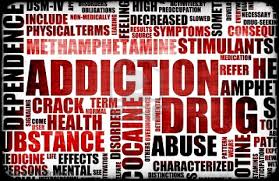 The unfortunate reality is that addiction, (also known as ‘substance dependency’), is found throughout the entire population – all ages – all occupations – all communities. Not only is such substance misuse widespread but it can involve dependence on virtually any mood-altering substance taken in excess, (alcohol, nicotine, legal drugs, illegal drugs, performance-enhancers, caffeine, chocolate, sugar – almost anything). However, we usually tend to only notice the more obvious, (more…)
Blog Post – June 2014
 ALL SORTS OF THERAPISTS:
There are lots of terms used to describe the health professionals who help people with their emotional, psychological or mental health concerns. Job titles such as counsellor, psychotherapist, psychological therapist, psychoanalyst, psychologist, psychiatrist and many more are all used. The unfortunate fact is that in the UK anyone can call themselves any kind of therapist or ‘ologist’ they like. The exception is the psychiatrists because only they have legally protected titles. With all these names flying about it is not surprising that people often wonder who all these professionals are. What the differences are between them? Who are the genuine article and who are the phonies?
So, how can you tell all these ‘ologists’ apart? Do their professional titles matter? The reality is that all these different titles probably owe more to how any particular therapist was originally trained than they do to actually observable differences in professional practice. After all, research shows us that most experienced therapists are not particularly are overly concerned about professional titles nor do they limit themselves to any given therapeutic approach when responding to their clients’ needs. Therefore, the real answer to the ‘what’s in a name’ puzzle is simple – in practical terms there are no significant differences. (more…)
Blog Post – May 2014
ANXIETY & STRESS
Here in the New Forest it looks like spring has sprung – at last. Even looking out over Southampton, we can see some hints of colour and growth. In such happier times it seems almost perverse to start talking about our anxieties and worries. However, we all get anxious; we all get stressed; we have all been there. 
The symptoms of anxiety can appear in the mind, (worry, fear, dread, irritability, etc.), or in the body, (palpitations, trembling, sweating, upset tummy, and so on). These days GPs are seeing more and more patients whose anxiety levels are worrying. About 10% of the population suffer from troubling levels of anxiety that are ‘clinically significant’ and about 4% of the population see a doctor about this problem. (more…)
Blog Post – April 2014
TRAUMA
Recently the nation has been worrying about the effects of the recent floods and storms. We can readily understand the damage to people’s  property and the disruptions to their lives. What we don’t so readily appreciate is the damage to their emotional well-being. Of course, most people who experience very frightening situations find that their inevitably heightened anxiety and fear levels soon start to fade. Sadly some don’t. These are the people who might eventually need some psychotherapeutic help.
In my work I often see people who are suffering from the emotional aftermath of traumatic incidents in their lives. It’s not all headlines stuff. Much of my work is with people suffering from ordinary, but no less scary, life events like car crashes, personal violence, injuries at work, and so on. Sometimes they weren’t personally involved with the drama. Just witnessing it was enough. Sadly, all too often, they don’t get to see me until many months, even years, after the event. If only they could have got some help at the time. Injuries can be treated and property can be repaired. The sooner the work starts, the sooner things get back to normal. That’s true of people’s damaged emotions too.
Blog Post – March 2014
THE WINTER BLUES
Well, it looks like winter is easing a bit at last and there are hints that we might soon be starting to enjoy some better weather. This is something that we all can look forward to. However, before winter loses it grip, it is worth remembering that bleak weather, just by itself, can sometimes cause us to become depressed. Any of us can get the winter blues. Of course, in many cases the answer is to just tough it through. Cheer yourself up somehow – meet your friends; take some exercise; have a nice hot bowl of soup; have a comfortable evening in the warm – whatever floats your boat. Sometime, however, if somebody becomes sufficiently depressed they might become what therapists call ‘of clinical significance’. When that happens we might not be talking about the winter blues anymore. We might be dealing with a case of Seasonal Affective Disorder, (SAD).